

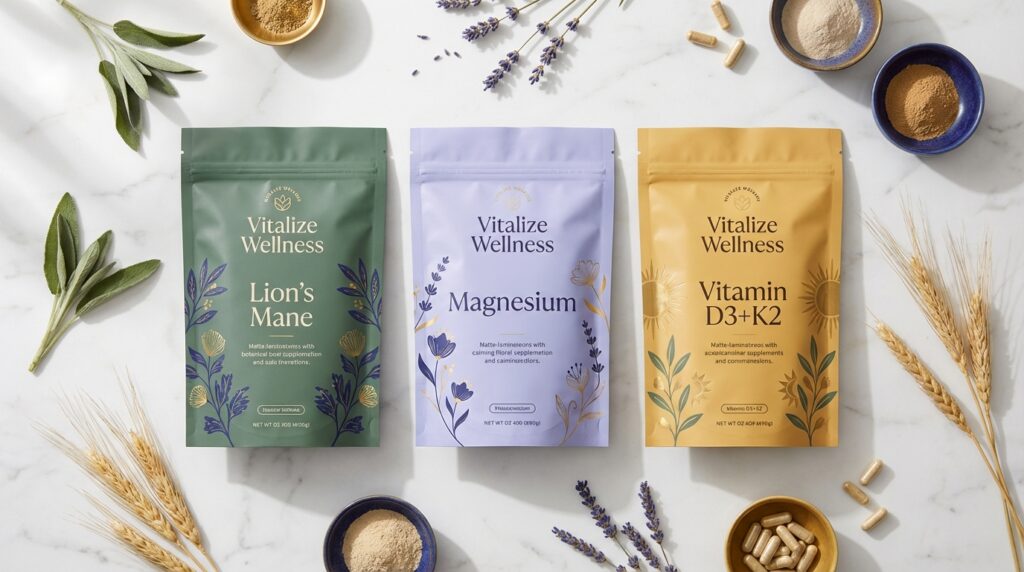

Priya Sharma spent three years as a naturopath before she decided to formulate her own supplement line. The products were genuinely excellent — third-party tested, clean ingredients, evidence-backed formulations. She knew what went into them. She knew they worked. Her clients loved them.
But the packaging looked like it had been designed in an afternoon. Beige labels. A stock photo of leaves. A font that came from a default template. And the results reflected exactly that: an Amazon Australia click-through rate of 1.1% — meaning 98.9% of shoppers scrolled directly past her listings without clicking.
Two of her Melbourne retail stockists were considering dropping her products. One buyer told her directly: “Your product is probably great, but it looks cheap. Our customers won’t pick it up.”
Three months after working with SR Orbit, Vitalize Wellness had an Amazon Best Seller badge in their category. Their CTR had gone from 1.1% to 4.3%. Their retail stockists had not only stayed — they’d expanded their orders. And overall sales had grown by 180%.
The products hadn’t changed. The formulations were exactly the same. The only thing that changed was how the brand presented itself — and that changed everything.
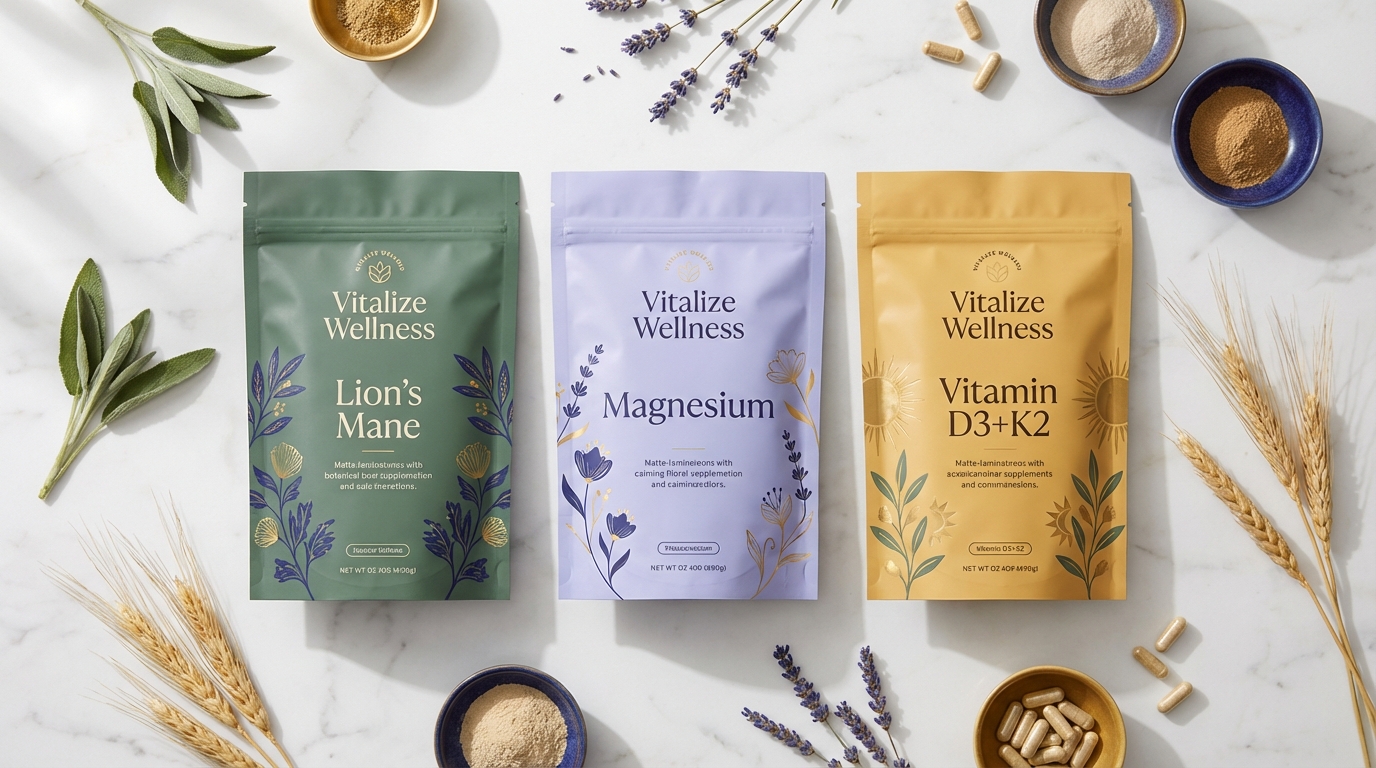
The Situation — Before SR Orbit
When Priya first came to us, we did a full brand and packaging audit. Here’s what we were working with:
- No brand identity system — The logo was a generic script font. No defined colour palette. No typography guidelines. No brand voice. Every touchpoint looked slightly different from every other.
- Amateur packaging — Beige pouches with stock botanical photography. The information hierarchy was unclear — no visual guide for where the eye should go first. Certifications buried. Benefits invisible at a glance. No premium finish treatment.
- Amazon performance in crisis — 1.1% CTR means that for every 1,000 people who saw Vitalize’s thumbnail in Amazon search results, only 11 clicked. The industry average for health supplements is 2.5–3%. At 1.1%, Vitalize was dramatically underperforming — and it was entirely a design problem.
- Retail rejection risk — Two stockists had raised concerns about the packaging’s shelf presence. A third had declined to take the products entirely on the basis of visual presentation.
The core business was sound. The products had genuine quality. Existing customers loved them and reordered consistently. The problem was entirely at the front door — the first impression that determined whether a new customer ever picked up the product or clicked the listing.
The Strategy — What We Did
Phase 1 — Brand Strategy Discovery (Weeks 1–2)
We spent two weeks on discovery before creating a single design. This phase involved a detailed brand questionnaire, competitive analysis of the Australian and US health supplement markets, and a deep conversation with Priya about her customers, her values, and the experience she wanted people to have when they encountered Vitalize Wellness for the first time.
What emerged from that process was a clear positioning brief: premium, trustworthy, science-informed, naturally beautiful. Not clinical-pharmaceutical (cold, sterile, impersonal). Not artisanal-rustic (warm but amateur). Something more sophisticated than both — a brand that a 35–50 year old health-conscious professional woman would keep on her bathroom shelf and feel proud to recommend to friends.
That brief became the foundation for every design decision that followed. Colour choices, typography, illustration style, finish treatment — all traceable back to that positioning.
Phase 2 — Brand Identity System (Weeks 2–4)
With the strategy confirmed, we developed three distinct brand identity concepts for Priya to evaluate — each representing a genuinely different visual direction with a clear rationale.
The chosen direction became the Vitalize Wellness brand identity:
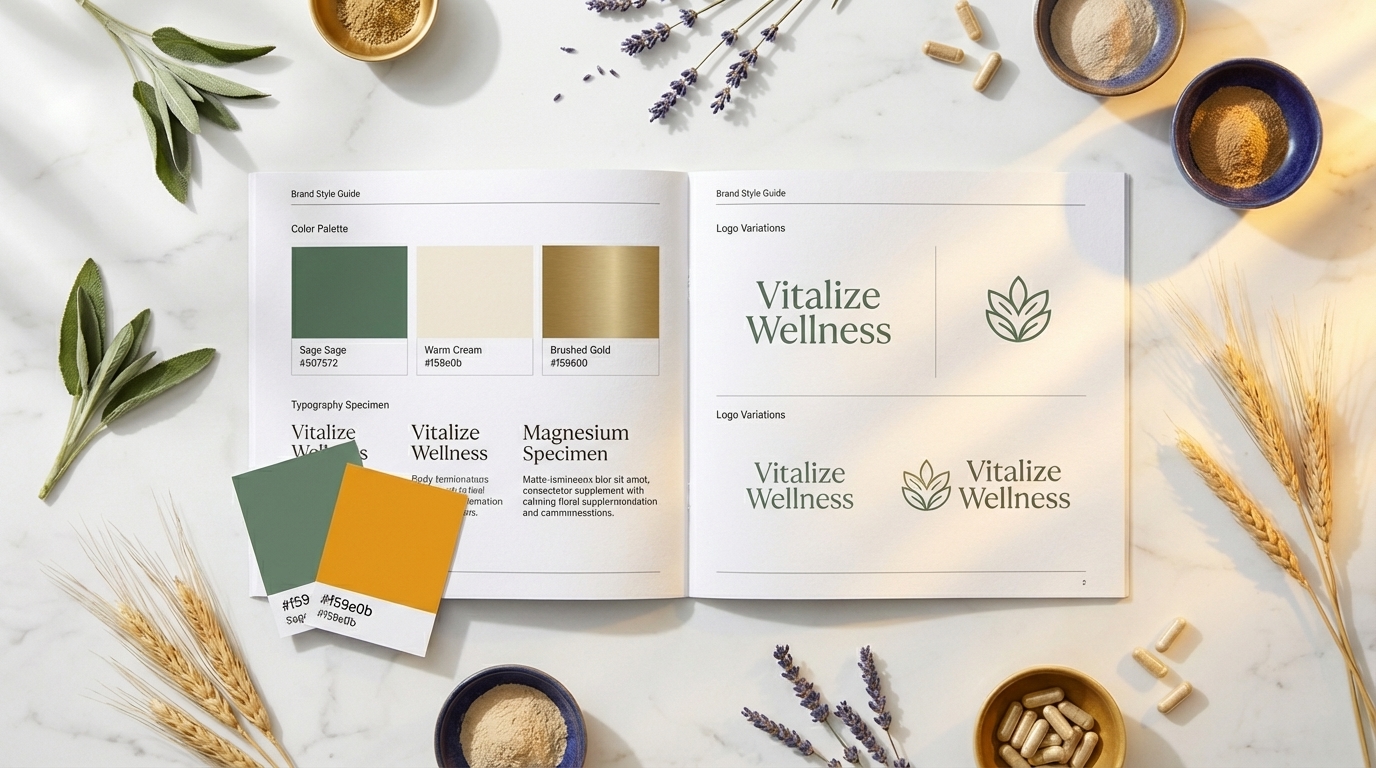
- Custom wordmark logo — A refined serif typeface with a custom-drawn minimal botanical mark (a single clean leaf form) that works as a standalone icon for small-format applications: social media profiles, favicon, embroidery, and Amazon product thumbnails.
- Colour palette — Deep sage green as the primary brand colour (signalling nature, purity, and clinical credibility simultaneously). Warm cream as the background tone (premium, approachable). Brushed gold as the accent (signalling quality and heritage without feeling dated). Each colour selected because it served the positioning — not because Priya had a preference.
- Typography system — A refined serif headline typeface paired with a clean, highly legible sans-serif body font. The combination communicates authority (the serif) and approachability (the sans-serif) simultaneously.
- Brand voice guidelines — “Informed but approachable wellness expert.” Clear, honest, knowledgeable. No wellness buzzwords. No miracle claims. The voice of someone who genuinely knows what they’re talking about and respects their customer’s intelligence.
Phase 3 — Three-SKU Packaging System (Weeks 3–6)
With the brand identity system finalised, we moved to packaging design for Vitalize’s three hero products: Lion’s Mane, Magnesium, and Vitamin D3+K2.
The packaging system was designed around a consistent architecture — the same structural layout across all three SKUs, with product-differentiating colour coding to allow customers to navigate the range instantly:
- Lion’s Mane — Deep teal accent (cognitive performance, focus, clarity)
- Magnesium — Soft lavender accent (calm, sleep, recovery)
- Vitamin D3+K2 — Warm gold accent (energy, vitality, sunshine)
Every packaging element was designed with Amazon thumbnail performance as a primary requirement. The brand name needed to be legible at 100×100 pixels. The key benefit needed to read at a glance. The visual identity needed to be distinctive enough to stand out in a category dominated by generic-looking supplements.
The finish specification: matte lamination on the base pouch (soft, premium tactile quality) with spot UV coating on the logo and wordmark (creating a visible contrast between the matte surface and the glossy mark that photographs beautifully and feels distinctive in-hand). This combination of finishes is common in luxury cosmetics — rare in the supplement category — and it immediately communicates a higher quality tier than competitors.
Every file was delivered print-ready — correct CMYK profiles, 300 DPI, proper bleed and safe zones, dieline templates, and a complete print specification document for Priya’s packaging supplier.
The Results — 3 Months After Relaunch
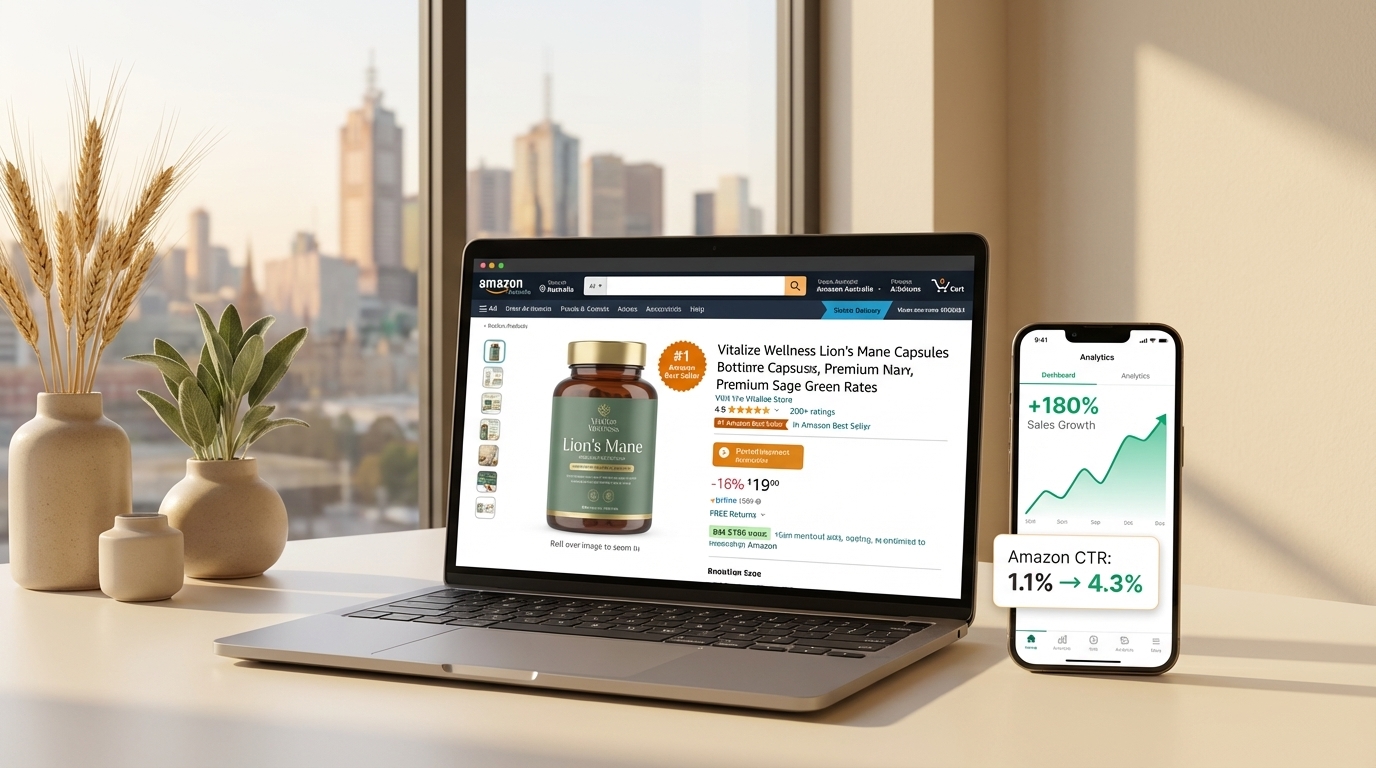
| Metric | Before Redesign | After 3 Months | Change |
|---|---|---|---|
| Amazon Australia CTR | 1.1% | 4.3% | ×3.9 improvement |
| Overall Sales Growth | Baseline | +180% | +180% all channels |
| Amazon Best Seller Badge | None | ✅ #1 (Lion’s Mane) | Achieved week 8 |
| Retail Stockists | 2 at risk of dropping | 3 stockists, expanded orders | +1 new, all expanded |
| Wholesale Inquiries | 0 | 1 national health retailer | New revenue channel |
| Amazon Star Rating (avg) | 4.2 stars (22 reviews) | 4.8 stars (80+ reviews) | More buyers = more reviews |
What Actually Changed — And Why
The 4.3% Amazon CTR is the number that tells the most important story. In the health supplement category on Amazon Australia, the average CTR is approximately 2.5%. Vitalize went from 1.1% — dramatically below average — to 4.3%, meaningfully above it.
That improvement happened because of a single change: the thumbnail image. The new packaging, photographed professionally, created a product listing image that communicates quality, trust, and premium positioning in the first half-second of a shopper’s scroll. The previous packaging communicated “cheap private label supplement” in the same half-second. The product hadn’t changed. The perception of it had changed completely.
The retail expansion happened for the same reason. The buyer who previously said “it looks cheap” reordered when she saw the new packaging. A national health retailer reached out directly, citing the “professional brand presentation” as their reason for interest. The brand was doing the work that Priya and her products couldn’t do on their own — making the right first impression before a word was read or a product was tried.
What Priya Said
“SR Orbit didn’t just redesign my packaging — they redesigned how seriously people take my brand. I had great products that weren’t getting the recognition they deserved. Now customers pick them up. They read the label. They buy. One of my stockists told me it’s the best-looking supplement range they carry. And I have a national retailer interested in wholesale. None of that was happening before.”
Priya Sharma — Founder, Vitalize Wellness, Melbourne VIC, Australia
What This Means for Product Brands
Vitalize’s situation — excellent products held back by amateur brand presentation — is one of the most common things we see in the health, wellness, food, and beauty product space. The founders invest everything in the product and almost nothing in the brand identity that determines whether anyone ever tries it.
The uncomfortable truth that Vitalize’s story illustrates: in most product categories, brand design is not a marketing expense. It’s a revenue determinant. The brands that look like they deserve to succeed sell more — before a single word is read, before a review is checked, before a price is compared.
If you have a product brand — on Amazon, in retail, or direct-to-consumer — and your packaging isn’t doing the job it needs to do, we’d like to help. We offer a free brand and packaging consultation for product businesses in Australia, the US, and Canada. We’ll look at your current situation honestly and tell you exactly what we think it would take to produce results like Priya’s.
Get your free brand and packaging consultation →
Explore our packaging design services and brand identity design services to learn more about how we work.
SR Orbit is a full-service organic marketing agency based in Dhaka, Bangladesh, specialising in brand identity design and packaging for product businesses in Australia, the US, and Canada.